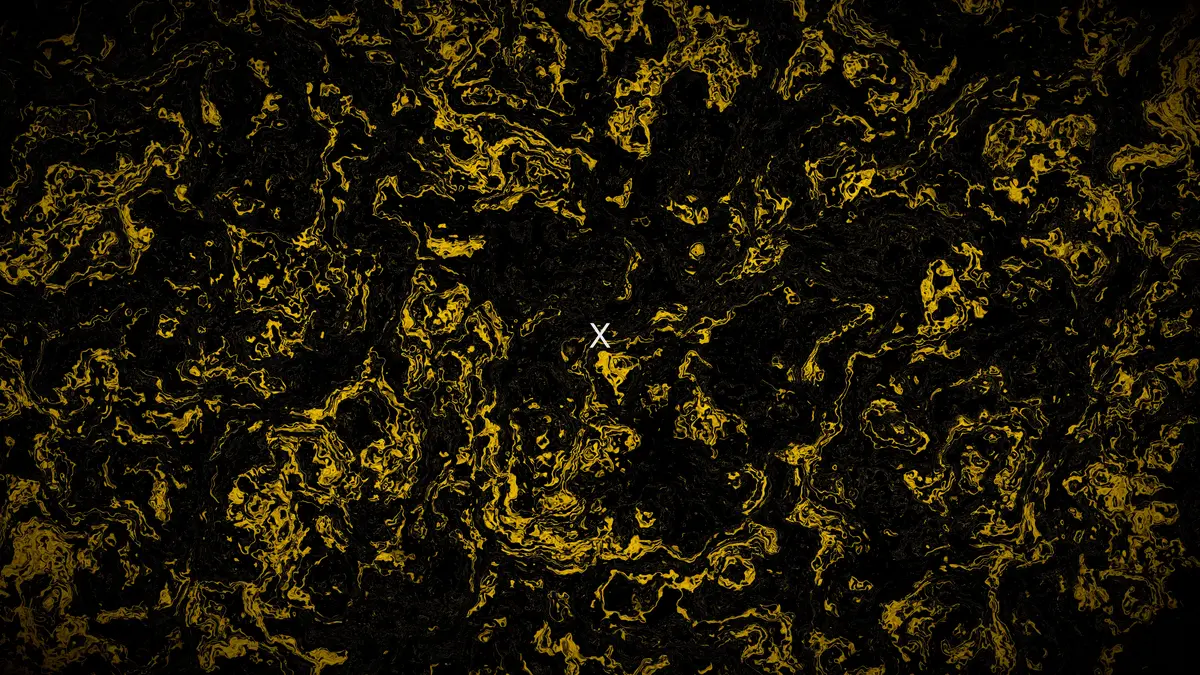
This is, perhaps, the most profound dimension of the superposition of circumstances, as it transforms a mathematical equation into an existential and ethical burden. As we have seen before, everything involves an immersion in collapse, even inaction; this phase explores the vertigo we experience as the "conscious observer" that submits reality to being channeled. When the superposition of circumstances () is translated into human life, collapse ceases to be a mathematical concept and becomes a deep emotional burden: the weight of abandoning the infinite to inhabit the concrete.
The Vertigo of the Possible
In the superposition state, all circumstances coexist as pure possibilities. Contemplating that infinity of paths generates a profound existential burden. Life pushes us out of superposition; it forces us to constantly collapse reality.
Søren Kierkegaard: "Anguish is the dizziness of freedom." This idea perfectly illustrates the paralysis and weight experienced by the subject when facing materialization . It is the fear of the multiplicity of vectors before collapse. Seen in a simplified way, that range of displeasures that can flourish in the air when contemplating all those alternate presents and futures that are immediately discarded when we perceive that our trajectory has been decisively modified.
Jean-Paul Sartre: "Man is condemned to be free." This maxim aligns with the conclusion that even omission () generates a collapse. Not choosing is already a choice; it is impossible not to tilt reality, even in absolute immobility, continuity extends over itself and there is nothing we can do or not do to reverse or avoid this behavior of existence in our function as experimenters or contemplators.
The Annihilation of Alternatives
The subject always experiences an existential affectation (). Psychologically, each collapse implies a mourning, whose depth may or may not be perceptible to the individual and will depend purely on the burden of awareness regarding the contemplation of those collateral developments that would have materialized were it not for the irreversibility of the collapse. For a circumstance to be born, all other potential versions of our life must dissolve. The psychological weight lies in assuming that loss and the transformation, however minimal, of our own identity.
Carl Jung: "I am not what happened to me, I am what I choose to become."
Consciousness assimilates the collapse of circumstances and, in the process, the subject itself reconfigures and feeds back, thus determining the nature and consequence of countless concatenated collapses.
Viktor Frankl: "Between stimulus and response there is a space. In that space is our power to choose our response. In our response lies our growth and our freedom."
That "space" is precisely the instant of superposition before the affinity coefficient () materializes a conclusion.
(...)
Related documents: